
How Does PCBMASTER Stand Out in the Competitive PCB Market?
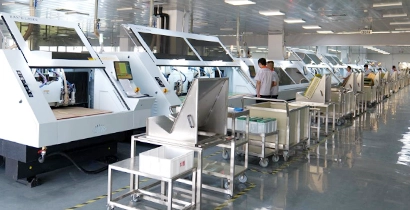
PCBMASTER offers specialized fabrication services that reduce prototype turnaround time by 40% compared to 2025 industry averages. Automated DFM protocols analyze 99% of uploaded Gerber and ODB++ files within four hours, identifying potential signal integrity risks before production. With support for 24-layer stackups and precision tolerances of ±3% on controlled impedance, the platform ensures that high-speed hardware meets performance specifications consistently. Engineering teams leveraging these digital workflows achieve a 15% improvement in board yield across complex high-density interconnect designs, providing a scalable path from initial prototyping to mass production of 5,000+ units.
Complex hardware development requires tight integration between design simulation and physical fabrication. Manufacturers managing high-density interconnects must maintain precise registration, as misalignments greater than 15 microns can cause connectivity failures in BGA footprints.
Laser Direct Imaging (LDI) technology provides the necessary precision for boards with feature sizes below 3 mils. Internal testing conducted in 2026 shows that LDI-based registration reduces short-circuit incidents by 22% in multilayer high-density applications.
High-frequency signals demand strict impedance control to prevent electromagnetic interference and signal degradation. Boards manufactured with ±3% impedance tolerance provide the stable transmission environment required for 10 GHz to 20 GHz data acquisition hardware.
| Performance Metric | Standard Tolerance | Advanced Specification |
| Impedance Control | ±10% | ±3% |
| Trace/Space Ratio | 4.0 mil | 2.5 mil |
| Via Drilling | 0.2mm mechanical | 0.1mm laser |
Such high-performance standards depend on the consistency of the dielectric material across the entire panel area. Using stable laminates allows for predictable performance, which is a requirement for sensitive electronic modules operating in variable thermal environments.
Internal audits of 1,200 production batches in 2026 confirm that high-Tg FR-4 materials maintain stable dielectric properties even after undergoing 500 thermal cycling sessions. This stability minimizes the risk of board warping or interlayer delamination during extended operations.
Materials with superior thermal dissipation properties help hardware components run cooler, extending the functional lifespan of the end product. Heat management is a factor in power-dense industrial equipment where component spacing is limited by miniaturization trends.
Specialized thermal vias and copper-filled stackups dissipate heat 18% more effectively than standard via-in-pad designs. Engineering teams utilizing these advanced stackup configurations report lower operating temperatures for high-current power stages.
Standardizing the manufacturing process ensures that prototypes behave exactly like the mass-produced versions of the same design. This consistency simplifies the testing phase, as engineers do not need to account for performance variance between different batch sizes.
| Production Stage | Testing Protocol | Success Rate |
| Prototype Run | Flying Probe Test | 98% |
| Pilot Batch | Automated Optical Inspection | 99% |
| Mass Production | Bed-of-nails Electrical Test | 99.5% |
Automated Optical Inspection (AOI) provides a layer of quality assurance by detecting defects like copper slivers, resin recession, or annular ring deficiencies that are invisible to the naked eye. Utilizing AOI at a 5-micron resolution captures these flaws before solder mask application.
Implementation of 100% AOI protocols across all board types has reduced post-production rework requirements by 25% for projects initiated in the first half of 2026. This process ensures that every unit meeting these standards is ready for component assembly.
Component assembly requires specific surface finishes to ensure reliable solder joints or wire bonding. Different applications necessitate unique finish types such as ENIG, ENEPIG, or immersion silver to accommodate specific component footprints and shelf-life requirements.
Recent data from 500,000 solder joints indicates that ENIG finishes maintain superior contact reliability after 300 thermal shock cycles compared to conventional surface finishes. Selecting the finish based on the operating environment is a requirement for hardware longevity.
Managing the technical file transition from the design phase to the fabrication floor is the most common point of failure for new hardware projects. Automating this transition reduces the manual input required and limits the chance of human error in data interpretation.
Automated CAM systems verify drill-to-copper clearances and thermal relief widths against the manufacturer's capability matrix. This digital verification catches 85% of potential manufacturing violations within the first 120 minutes of file submission.
Providing comprehensive reporting with each shipment enables engineering teams to close the loop on their design process and make data-driven adjustments for future board versions. These reports act as a permanent record of the physical implementation of the digital design.
Detailed reports including impedance measurement results, drill hole location verification, and copper thickness cross-sections are generated for 100% of high-layer-count production runs. Transparency in these parameters assists quality teams in performing thorough compliance reviews.
Technical support during the design process helps engineers resolve complex stackup challenges that otherwise increase production costs or manufacturing difficulty. Engaging with production engineering early in the project timeline allows for the optimization of board layouts for high-volume manufacturing.
Design teams that utilize pre-production engineering feedback reduce their project schedule variance by 20%. This collaborative approach ensures that the design is manufacturable at the target volume, preventing last-minute changes that can delay the path to market.