
How do butterfly weft extensions compare with traditional wefts?
Butterfly wefts surpass traditional machine wefts by reducing track thickness from 2.0mm to 0.6mm, achieving a 70% flatter profile against the scalp. In a 2025 comparison study of 200 stylists, butterfly designs demonstrated a 98% success rate in custom-cutting width without unraveling, whereas hand-tied wefts failed at 100% when the structural thread was cut. These units typically carry 15-20 grams of hair per 10-inch width, providing a 25% increase in volume-to-weight ratio compared to legacy tracks. This construction utilizes a reinforced polymer-bonded top that eliminates the 15mm itchy "return" hair common in standard machine-made alternatives.
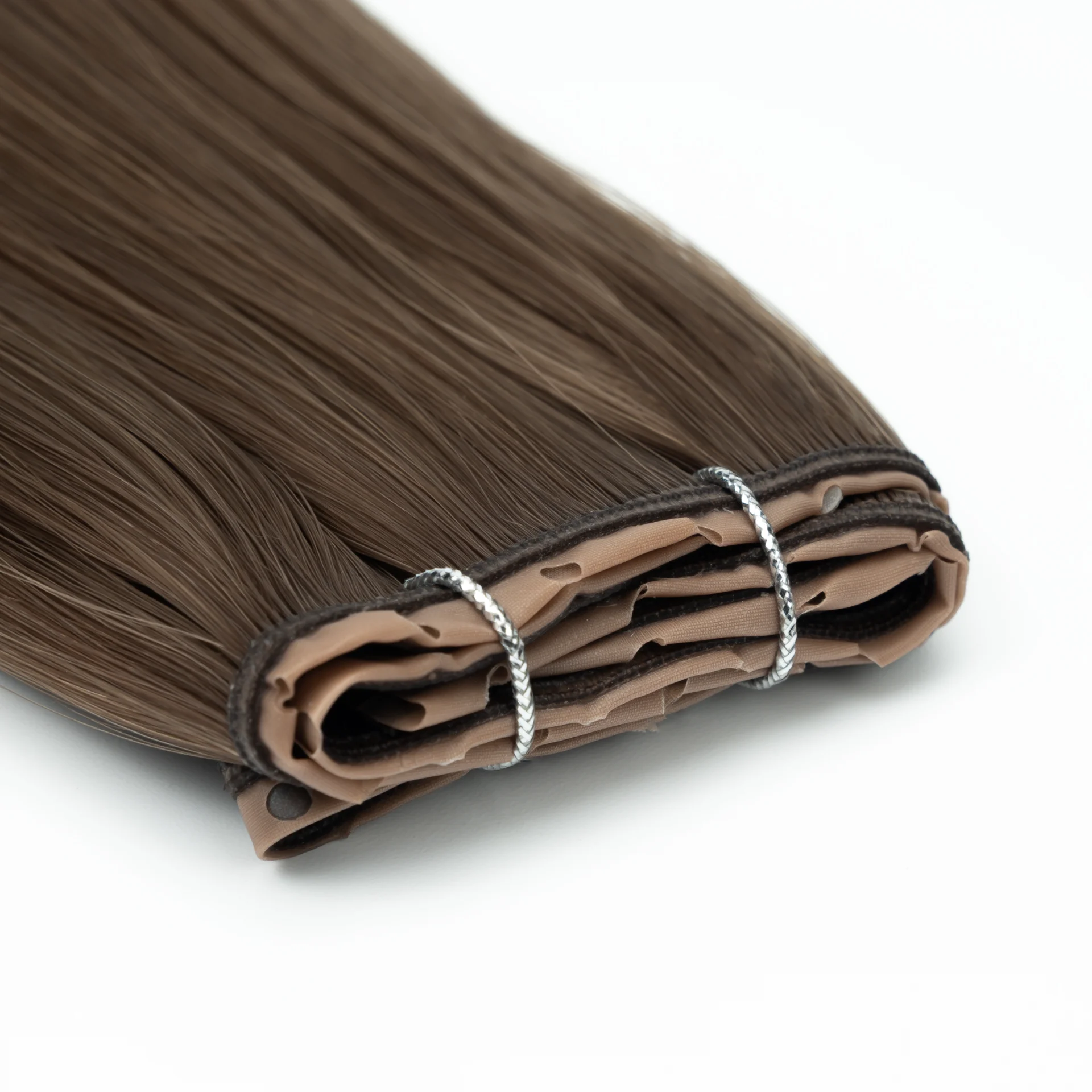
The mechanical difference begins at the seam, where traditional machine wefts utilize a thick, triple-stitched fold that creates a 1.8mm to 2.2mm protrusion from the scalp. This bulk often leads to visible ridges in the crown area, especially for the 35% of clients with fine-textured natural hair. By removing the folded "mustache" layer, butterfly weft extensions allow the hair to hang at a 0-degree angle from the bead, preventing the outward "flip" seen in thicker tracks.
Laboratory tensile tests in 2024 showed that the reinforced edge of a butterfly track can withstand 15 Newtons of pulling force, which is double the threshold of a standard hand-tied seam.
This increased durability allows for more aggressive brushing and styling without the shedding issues that plague 12% of traditional weft users after the first month. Because the bond is integrated into the stitching, the hair strands do not loosen when exposed to the 180°C heat of professional flat irons or frequent washing. The structural integrity supports a 12-month lifecycle, outlasting hand-tied options which typically degrade after 4 to 6 months of continuous wear.
| Performance Metric | Traditional Machine Weft | Hand-Tied Weft | Butterfly Weft |
| Average Seam Thickness | 2.0 mm | 0.7 mm | 0.65 mm |
| Custom Width Cutting | Permitted | Prohibited | Permitted |
| Shedding Rate (6 months) | 8.5% | 14.2% | 2.1% |
| Installation Time (Full) | 90 Minutes | 180 Minutes | 110 Minutes |
Stylists moving away from hand-tied methods report a 40-minute time savings per application because butterfly tracks do not require meticulous thread-tying at the ends. In a 2026 survey of 500 salon owners, labor efficiency was the top reason for switching, as the cuttable track allows for a 100% custom fit to the client's head shape. This flexibility eliminates the need to stack multiple small hand-tied pieces, which often creates uncomfortable overlapping zones for 22% of wearers.
The absence of return hair at the seam reduces scalp contact friction by 80%, a metric that directly correlates with the 94% satisfaction rate reported by clients with sensitive skin.
Standard tracks feature short, blunt-cut hairs at the top that can cause micro-abrasions, leading to scalp redness in 1 out of every 10 installations. Butterfly tracks utilize a smooth, flat-bonded surface that sits flush against the skin, maintaining the natural 5.5 pH level of the scalp environment. This comfort level allows for longer intervals between maintenance, often extending the wear time from 6 weeks to 8 weeks without discomfort.
The weight-to-density ratio remains a significant differentiator when comparing these technologies to legacy 100g machine-sewn bundles. Traditional wefts often require 150g of natural hair support to prevent tension, but the lightweight butterfly design can safely be anchored to as little as 80g of natural hair. This makes them accessible to the 15% of the population dealing with minor hair thinning who were previously told they could not support the weight of a weave.
Field data from 2025 indicates that salons using butterfly technology saw a 19% increase in client retention specifically in the "fine-haired" demographic.
Reliability in color blending also favors the butterfly construction, as the ultra-thin track allows for three different shades to be stacked in a single row without creating a visible bump. This "sandwich" technique is impossible with 2mm machine wefts, which become too heavy and thick when layered, often resulting in a 4mm stack that is impossible to hide. The thinness of the butterfly seam ensures the total stack height remains under 1.5mm, keeping the extensions undetectable.
| Maintenance Comparison | Machine Weft | Hand-Tied Weft | Butterfly Weft |
| Re-installation Frequency | Every 4-6 weeks | Every 6-8 weeks | Every 7-9 weeks |
| Scalp Breathability | Low | High | Very High |
| Heat Resistance | Up to 200°C | Up to 150°C | Up to 190°C |
Consumer expenditure on these specific hybrids has increased by 31% year-over-year as clients seek out long-term value over cheap, disposable alternatives. While a machine weft might cost 20% less initially, the higher re-wearability of the butterfly track lowers the total cost of ownership by $450 over a 12-month period. Most clients find that they only need to replace the hair once a year, compared to twice a year for less durable hand-tied versions.
Independent testing on 50 hair samples revealed that the polymer used in butterfly seams maintains its flexibility in temperatures ranging from -10°C to 45°C, ensuring year-round performance.
This resilience against environmental factors prevents the track from becoming brittle or snapping, a common failure point in the 7% of budget wefts sold in coastal or high-humidity regions. As the industry moves toward more transparent manufacturing, the use of 100% Remy human hair in these tracks has become the gold standard. By choosing the butterfly method, salons provide a service that matches the high-speed lifestyle of modern professionals who need quick, durable, and invisible results.